The world has a waste crisis, and it is getting harder to ignore. According to the World Bank, global waste generation is expected to grow by 70% by 2050 if current consumption patterns continue. UNEP has flagged waste mismanagement as one of the leading drivers of pollution and greenhouse gas emissions globally, while the EPA consistently highlights how poor waste management undermines both public health and environmental protection efforts.
The core problem is not simply that people produce too much waste — it is that existing waste management infrastructure was never designed to handle the scale, complexity, or diversity of modern waste streams. Traditional recycling systems rely on manual sorting, inconsistent collection, and limited data, resulting in high contamination rates, overflowing landfills, and enormous inefficiencies across logistics and routing. Cities and municipalities are spending more, recovering less, and struggling to meet sustainability goals in a system that is fundamentally not built for the demands of the 21st century.
This is exactly the gap that smart recycling technology like MataRecycler is designed to fill.
What is MataRecycler and Why It Matters
MataRecycler is a smart AI recycling system that combines artificial intelligence, IoT technology, cloud computing, and real-time analytics to transform how waste is collected, sorted, tracked, and managed. It is not simply a smarter bin — it is a comprehensive smart waste management platform built to support the full waste lifecycle, from the moment materials are discarded to their recovery and re-entry into the circular economy.
What makes MataRecycler genuinely important is the timing. Digital transformation is reshaping infrastructure across cities worldwide, and waste management is one of the last sectors to catch up. MataRecycler positions itself as a bridge between outdated recycling infrastructure and the intelligent systems that smart city technology requires. It serves households, businesses, and municipalities — creating a connected recycling ecosystem that generates actionable environmental data at every stage of the process.
In an era where ESG reporting, sustainability goals, and environmental responsibility are increasingly central to how cities and businesses operate, MataRecycler provides the tools to make meaningful waste reduction measurable, trackable, and scalable.
How MataRecycler Works
At its heart, MataRecycler is a systems integration platform — pulling together hardware, software, AI classification, and cloud-based analytics into one unified smart waste management workflow.
Here is how the process flows from start to finish:
Step 1: Smart Collection at the Source
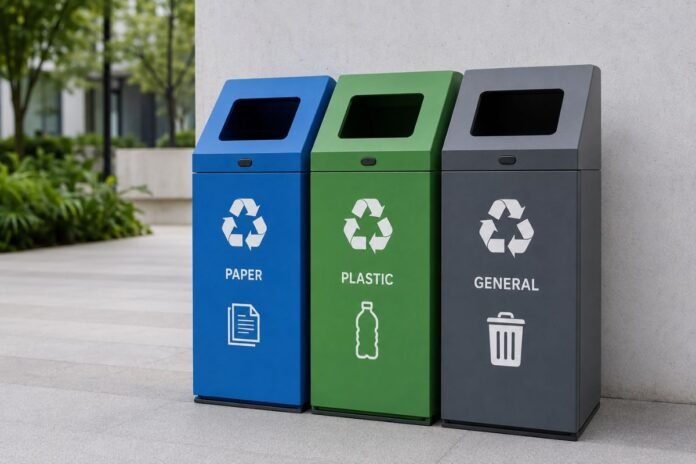
Smart bins equipped with IoT sensors monitor fill levels, detect waste contamination, and capture data in real time. These smart bin sensors communicate directly with the cloud, feeding continuous environmental data into the central platform.
Step 2: AI Waste Sorting and Material Identification
As waste enters the system, AI-powered recycling classification technology analyses materials using machine learning models trained on vast waste datasets. Material identification happens rapidly and accurately, sorting waste into correct recycling streams before contamination can compromise the recovery process.
Step 3: Real-Time Data Flow and Cloud Processing
All data collected from smart bins, sensors, and sorting systems flows into cloud computing infrastructure where analytics engines process it instantly. This real-time tracking allows operators to see exactly what is happening across their entire waste management network at any moment.
Step 4: Optimization and Predictive Routing
Using predictive analytics and smart routing systems, MataRecycler dynamically adjusts collection schedules and logistics systems based on actual bin fill levels and demand patterns. This collection optimization eliminates unnecessary collection runs, reduces fuel use, and cuts operational costs significantly.
Step 5: Reporting and Dashboards
Operators, businesses, and municipalities access all of this through user dashboards and sustainability dashboards that present environmental analytics in clear, actionable formats. Sustainability reporting for ESG purposes becomes straightforward when data is already structured and continuously updated.
Core Technologies Behind MataRecycler
MataRecycler’s power comes from the smart integration of several technologies working together as a cohesive digital ecosystem.
| Technology | Role in MataRecycler |
| Artificial Intelligence | AI classification, sorting, and waste analytics |
| IoT | Sensor networks, smart bins, real-time monitoring |
| Machine Learning | Pattern recognition, recycling accuracy improvement |
| Cloud Computing | Data storage, processing, and platform delivery |
| Predictive Analytics | Waste forecasting, predictive routing, collection optimization |
| Mobile App | User feedback, recycling behavior tracking, engagement |
| Blockchain Integration | Transparency, data verification across recycling streams |
| Analytics Platforms | Environmental monitoring, ESG dashboards, reporting |
These technologies do not operate in silos — they form an AI ecosystem, an IoT ecosystem, and an analytics ecosystem that collectively create smart environmental systems capable of managing waste at genuine scale.
Key Features of the System
MataRecycler is built around features that address the real operational challenges that municipalities, businesses, and households face every day.
Smart Bins with Integrated Sensors
The smart bins at the core of MataRecycler are far more than containers. Equipped with sensors measuring fill levels, temperature, and contamination indicators, they feed continuous waste intelligence into the system. Smart bin infrastructure transforms passive waste collection into active, data-driven waste management.
AI-Powered Sorting and Classification
AI waste sorting removes the human error that plagues traditional recycling systems. Machine learning models identify materials accurately, improving recycling accuracy and dramatically reducing waste contamination that typically sends recoverable materials to landfill unnecessarily.
Real-Time Tracking and Monitoring
Real-time tracking across the entire waste lifecycle means no part of the process happens in a black box. Environmental monitoring is continuous, and any anomaly — whether contamination, overflow, or system failure — triggers immediate alerts for faster decision-making.
Predictive Routing and Logistics Optimization
Smart routing systems use historical and real-time data to build optimised collection routes that save time, cut fuel use, reduce emissions, and lower the overall cost of waste collection services. This predictive routing capability is one of MataRecycler’s most impactful features for cities managing large-scale logistics.
User Dashboard and Mobile App
The mobile app and user dashboard give individual users, building managers, and business operators direct visibility into their recycling behavior, contributing to behavior change and greater community participation in recycling improvement. User feedback captured through the app also continuously improves the system’s AI models.
Incentive-Based Systems
MataRecycler includes incentive-based systems that reward responsible recycling behavior, driving sustained engagement from households and businesses alike.
Benefits for Users, Businesses, and Cities
The benefits of MataRecycler extend across every level of the waste management chain.
For households:
- Clearer guidance on sorting and recycling streams
- Feedback through mobile app on recycling behavior and impact
- Participation in circular economy goals at the individual level
- Contribution to community sustainability goals
For businesses:
- Significant cost efficiency through optimised waste collection and reduced landfill fees
- ESG reporting data generated automatically through analytics platforms
- Demonstrable environmental responsibility for stakeholders and regulators
- Reduced environmental cost of waste mismanagement
For cities and municipalities:
- Smart waste management infrastructure that scales with city growth
- Real-time environmental data across all waste collection points
- Reduced emissions from optimised routing and logistics
- Improved public health outcomes from lower contamination and pollution
- Cost savings across logistics systems and waste processing operations
- Data to support smart city technology planning and digital transformation initiatives
The economic impact of implementing MataRecycler at city scale is substantial — lower operational costs, better resource recovery, and measurable progress toward circular economy targets that cities are increasingly being held accountable for.
Impact on Environment and Smart Cities
The environmental impact of smart recycling platforms like MataRecycler is both direct and systemic. Directly, better sorting leads to higher recycling accuracy, more materials recovered, less waste sent to landfill, and fewer greenhouse gas emissions from both decomposing waste and unnecessary collection runs.
Systemically, MataRecycler contributes to the circular resource flow that a genuine circular economy requires. When waste is accurately sorted, tracked, and processed, materials re-enter production cycles rather than being lost — reducing consumption of virgin resources, lowering carbon footprint across supply chains, and supporting long-term resource conservation.
For smart cities, MataRecycler provides smart environmental networks that integrate naturally with broader smart city infrastructure — connecting waste management data to urban planning, environmental strategy, and sustainability reporting systems that cities rely on to make evidence-based decisions.
The connection to climate goals is direct. Landfill reduction lowers methane emissions. Optimised routing reduces fuel use and vehicle emissions. Higher recycling rates reduce the energy and environmental cost of raw material extraction. Together, these effects position MataRecycler as a practical and measurable contributor to city-level climate commitments.
Challenges and Future of Smart Recycling
No technology arrives without challenges, and smart waste management systems are no exception.
Current challenges for MataRecycler and similar smart recycling platforms include:
- Implementation costs for cities and municipalities with constrained budgets
- Infrastructure gaps in lower-income regions where smart infrastructure ecosystem investment is limited
- Data privacy considerations around continuous environmental tracking and monitoring
- Scalability across diverse urban environments with varying waste management norms
- Resistance to system modernization from established waste collection operators
- Ensuring digital systems remain accessible and useful for all population groups
The future, however, is genuinely promising. Global adoption of smart waste solutions is accelerating as cities face mounting pressure to meet environmental targets. Advances in AI classification, machine learning, and IoT ecosystems are making smart recycling more accurate and affordable every year.
Future developments for MataRecycler are expected to include deeper blockchain integration for full waste lifecycle transparency, more sophisticated waste forecasting through predictive analytics, expanded smart circular economy systems that connect recycling data directly to manufacturing supply chains, and greater smart environmental platforms interoperability with urban digital ecosystems.
The innovation trajectory is clear: waste intelligence systems integration will become a standard feature of smart city infrastructure within the next decade.
MataRecycler vs Traditional Recycling Systems
Understanding what makes MataRecycler different requires an honest look at where traditional recycling systems fall short.
| Feature | Traditional Recycling | MataRecycler |
| Sorting Method | Manual, error-prone | AI-powered, automated |
| Data Availability | Limited or none | Real-time, comprehensive |
| Contamination Control | Reactive | Proactive, sensor-driven |
| Collection Scheduling | Fixed routes | Predictive, demand-driven routing |
| Reporting | Manual and infrequent | Automated sustainability dashboards |
| Scalability | Low | High, cloud-based |
| Environmental Monitoring | Minimal | Continuous, integrated |
| User Engagement | Passive | Active, mobile app and feedback |
| Cost Efficiency | Low due to inefficiencies | High through optimization |
| Circular Economy Support | Weak | Built-in through systems integration |
The gap is significant. Traditional recycling systems were not built for the data demands, sustainability expectations, or logistical complexity of modern cities. MataRecycler’s approach to digital waste management offers a fundamentally different model — one built around automation, intelligence, and continuous improvement rather than static processes and manual intervention.
Conclusion
MataRecycler represents exactly the kind of waste management innovation that cities, businesses, and households need right now. By combining AI, IoT, cloud computing, machine learning, and real-time analytics into an integrated smart recycling platform, it addresses the waste crisis not with incremental improvements but with genuine systemic transformation.
The benefits — better recycling accuracy, lower contamination, reduced emissions, significant cost efficiency, and real-time environmental data — are not theoretical. They are the measurable outcomes of smart waste infrastructure applied thoughtfully at scale.
As UNEP, the EPA, and the World Bank continue to call for urgent action on global waste, and as cities accelerate their digital transformation journeys, smart recycling platforms like MataRecycler will move from innovative alternatives to essential infrastructure. The circular economy cannot function without smarter waste systems, and MataRecycler is helping build exactly that — one smart bin at a time.
Frequently Asked Questions
Q:What is MataRecycler?
A:MataRecycler is a smart AI recycling system that uses IoT sensors, machine learning, and cloud analytics to automate and optimise waste collection, sorting, and tracking.
Q:How does MataRecycler reduce waste contamination?
A:MataRecycler uses AI classification and smart bin sensors to identify and flag contamination in real time before it compromises recycling streams.
Q:Who can use MataRecycler?
A:MataRecycler is designed for households, businesses, and municipalities seeking smarter, data-driven waste management and sustainability reporting solutions.
Q:How does MataRecycler support the circular economy?
A:By improving recycling accuracy and resource recovery, MataRecycler keeps more materials in circulation and out of landfill, directly supporting circular economy goals.